
One-Health: A Notion to Address Human Health Concerns in a Transdisciplinary Manner
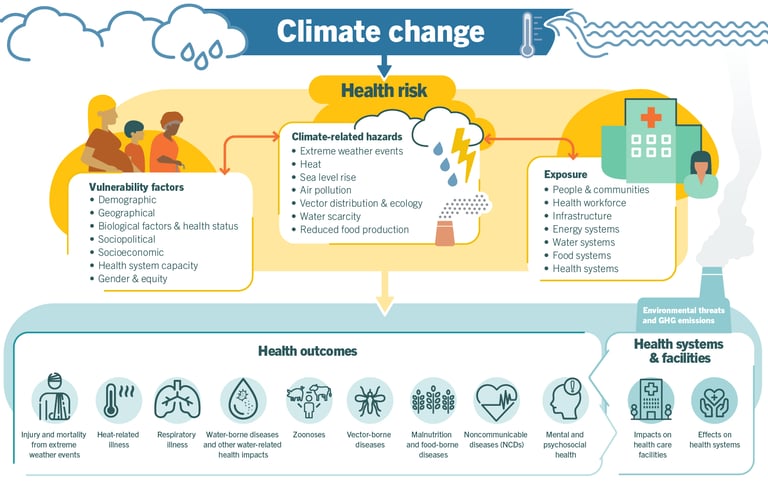
The “One Health” approach acknowledges the connections between environmental, animal, and human health. The Center for Disease Control and Prevention defines One Health as “a collaborative, multisectoral, and transdisciplinary approach—working at the local, regional, national, and global levels—with the goal of achieving optimal health outcomes recognizing the interconnection between people, animals, plants, and their shared environment”.1 The term ‘One Health’ was first used in 2003–2004 and was associated with the emergence of severe acute respiratory disease (SARS) in early 2003. A few of the technical terms cited in the definition can be elaborated as: Collaboration is the collective effort of individuals or groups where they share ideas, resources, and responsibilities to achieve mutual success and innovation towards a common goal. Multisectoral refers to joined involvement across various sectors or fields, governmental or private emphasizing cooperation between different institutions, ministries, areas, industries, and domains to address complex issues and achieve comprehensive solutions. Transdisciplinary refers to an approach that transcends traditional disciplinary boundaries, integrating knowledge, methods, and perspectives from multiple fields to address the human-animal-ecology interface solve complex problems, and foster a holistic understanding of the subject. One Health places a strong emphasis on the cooperation of multiple sectors, including public health, veterinary, husbandry, medicine, Ayurveda, Yoga, Unani, Siddha & Homeopathy (AYUSH), environmental & metrological science, agriculture, municipality, and rural development. To cover the above important areas, a major step toward formalizing the concept of One Health was taken in 2021 when the Food and Agriculture Organization (FAO), World Health Organization (WHO), United Nations Environment Program (UNEP), and World Organization for Animal Health (WOAH) formed a High-level expert panel. Historical Points of View The importance of the environment in the causation of disease has been highlighted by Hippocrates (5th or 4th Century BCE) in his book, entitled De aëre, aquis et locis (Air, Waters, and Place). However, the concept of One Health is a recent occurrence and can be traced back at least two hundred years. The linkages of zoonosis with human health were discussed by researchers in the past. For example, the Black Death (bubonic plague) epidemic was caused by Yersinia pestis, which engulfed almost 75-200 million lives between 1346 to 1353 AD. Everyone agreed that it was related to factors like human travel, zoonotic origin, bacteria transferred from fleas that resided on rodents, and eventually human-to-human transfer. Another highly contagious infection affecting cattle, water buffalos, giraffes, wild pigs, and antelopes during the early eighteenth century was rinderpest, also known as the cattle plague, which had a negative impact on food supplies and human livelihoods. Pope Clement XI’s physician Santo Spirito, Giovanni Maria Lancisi jotted down eleven detailed suggestions, including quarantines, for dealing with and stopping the spread of rinderpest. Almost 300 years after Lancisi penned his monologue on this topic, the Global Rinderpest Eradication Program (GREP,1994) was launched with successful immunization and quarantine strategies; the disease was declared completely eradicated in 2011 by WHO. Lancisi’s monographs on influenza, cattle plague (rinderpest), and malaria are considered a masterpiece of an epidemiologist. In 1960, Calvin Schwabe first introduced the idea of “One Medicine”. It acknowledges that paradigms in veterinary and human medicine are identical and that each field can benefit the advancement of the other. In 1980, Dr Rudolf Virchow was among the early proponents of the One Health concept. Dr Calvin Schawabe, an epidemiologist, advocated for a combined human and veterinary strategy to fight zoonotic illnesses, which laid the groundwork for modern One health. This concern intensified during the 20th century as diseases such as avian influenza, HIV/AIDS, Ebola, and H1N1 and COVID-19 pandemics impacted severely all spheres of life, drawing attention to the necessity of an integrated strategy that transcends conventional veterinary and medical boundaries. Since then, one health approach has become a strong initiative throughout the world for various public health interventions. With the increasing interconnectedness of the world, the rapid spread of infectious diseases is a significant concern. One Health contributes to global health security by fostering collaboration between nations, sharing information, and implementing coordinated strategies to prevent and control disease outbreaks. The health of the environment plays a crucial role in the overall well-being of populations. One Health advocates for sustainable practices that promote environmental health, recognizing that changes in ecosystems can have direct and indirect impacts on human and animal health. Public Health Concerns in One Health Approach The one health approach has been promoted recently in India and encompasses all zoonotic diseases, both endemic and emerging—vector-borne infections, neglected tropical diseases, antimicrobial resistance, food safety and security, environmental contamination, climate change, contaminated food and water, air pollution, and other health issues affecting people, animals, or the environment. Agriculture is a significant part of India’s economy, and the health of livestock is closely linked to the well- being of rural communities. One Health can contribute to sustainable agriculture by addressing the health of animals, ensuring food safety, and promoting responsible use of antimicrobials. The widespread use of antibiotics during farming for poultry and cattle breeding apart from medicinal indications and inappropriate burial of animal carcasses led to the further spread of not only soil and water contamination but also antibiotic resistance in the food crops grown in those regions. Antimicrobial Resistance has become a great public health menace in current times. Therefore, among livestock breeders and farmers, these vital issues need strong advocacy so that rational use of antibiotics may be stated. A national standing committee on zoonosis was formed in 2007.2 During the 12th Five-year plan (2012-17) the Inter-sectoral Coordination for Prevention and Control of Zoonotic Diseases was approved which is currently been renamed as National One Health Program for Prevention and Control of Zoonoses (NOHP-PCZ).3 Rabies and leptospirosis are being targeted by utilizing existing surveillance systems in all sectors, roping in Veterinary / Wildlife institutes as regional Coordinators, Joint Capacity Building programs, Exploring networking and mapping laboratory resources & IEC. One Health emphasizes the importance of surveillance systems that monitor health trends in humans, animals, and the environment. In India, strengthening these systems can lead to early detection and response to potential health threats. Challenges and Future Directions between different sectors, funding constraints, and the need for a cultural shift in how health is perceived are among the obstacles. However, the potential for improved health outcomes, sustainable development, and global health security makes the effort worthwhile. In conclusion, the One Health approach is a comprehensive and integrated approach that recognizes the interconnectedness of human, animal, and environmental health. Its historical development reflects the growing awareness of the complex factors influencing global health. In India, where the convergence of diverse ecosystems, populations, and health challenges is evident, the adoption of the One Health approach holds great promise for addressing current and emerging health issues. Through collaborative efforts across disciplines and sectors, India can enhance its resilience to health threats, promote sustainable development, and contribute to global health security. While the One Health approach offers numerous benefits, its implementation comes with challenges. Coordination
Dr Jugal Kishore, Dr Jaidev Khatri, Dr Pallavi Boro